In the tribune NHL
2026 NHL Draft: the winners, the losers and the best trades
13 h 35 · 2 vues
Every year, the draft monopolizes attention. We dissect the first picks, compare the prospects and attempt to predict which ones will become stars. Yet history constantly reminds us that the real winners during this period are not always those who take the stage first. More often than not, it's the general managers who capitalize on the context to reshape their rosters.
The 2026 market perfectly illustrates this reality.
More than the players selected, it's the trades made before, during and immediately after the draft that allow us to measure the direction organizations have chosen. Some displayed a clear vision. Others seemed to navigate based on opportunities. And, as is often the case in the NHL, the difference between these two approaches is far from insignificant.
Trades that tell us more than the picks themselves
Unlike some summers marked by a single spectacular trade, this one was built through accumulation. A series of moves, sometimes discreet, sometimes much more publicized, quietly reshaped several franchises.
Some teams decided to convert veterans into future capital. Others did the exact opposite by sacrificing picks to improve their lineup for next season. A few organizations tried to play both sides, hoping to remain competitive while preparing for the future.
That's often where things get complicated.
A rebuild requires patience. A window to win sometimes requires accepting a steep price. Between the two, many general managers fall into a middle ground that ends up slowing both objectives simultaneously.
The draft also reminds us of a reality we sometimes forget: a draft pick never has a fixed value. Its value depends on context, teams' needs and how many organizations are convinced they've found their future star. In an active market, a simple first-round pick can become an extremely sought-after asset. Conversely, it remains nothing more than a promise.
Publicité
The best organizations seem to understand this well. They know precisely when to keep their picks… and when to convert them into players capable of contributing immediately.
Florida continues to act like a team that wants to win now
If we need to identify a club that clearly embraced its strategy, Florida ranks at the top of the list.
By acquiring Brady Tkachuk in exchange for a substantial package of assets, the Panthers confirmed what many already suspected: they believe their window to pursue Stanley Cup glory is open. In this context, accumulating picks no longer holds the same value as adding a player capable of influencing playoff results.
This type of trade obviously carries risk. The picks exchanged could eventually produce very good players. But when a team truly believes it can contend for the Stanley Cup, it cannot continually defer its ambitions to later.
The Panthers accepted this bet. At least their logic is perfectly coherent.
Washington bets on the concrete
The Capitals also sent a clear message with the acquisition of Jordan Kyrou.
Instead of retaining several assets whose value remained theoretical, Washington preferred to obtain an established player, capable of contributing immediately to the offense.
It's always easier to sell the potential of a prospect than the actual production of a proven player. Yet teams aspiring to win know that goals scored today are often worth more than promises of tomorrow.
Washington didn't seek to impress with the volume of its assets. The organization prioritized immediate results.
Minnesota improves its team quietly
Not all good trades create a storm on social media.
The Minnesota Wild is probably the best example.
By adding Blake Coleman and Olli Maatta in exchange for Jake Middleton and some picks, the club mainly improved its roster depth. It may not be a trade people will still talk about in five years, but it's exactly the type of decision that often helps a team through an 82-game season.
Minnesota didn't seek a headline-grabbing move.
It simply addressed specific needs without completely compromising its flexibility for the years to come. This approach is rarely spectacular, but it often pays off.
Calgary leaves several questions
At the other end of the spectrum, the Flames give the impression of an organization still searching for its true identity.
The trades multiplied, but it becomes harder to identify the direction being pursued.
When a team trades several veterans, continuously modifies its core and accumulates different assets without the whole forming a clearly identifiable project, it risks losing more value than it creates.
A rebuild is a strategy.
A push for the playoffs is another.
Getting stuck between the two often becomes the worst option.
Markstrom's departure changes things in New Jersey
With the Devils, Jacob Markstrom's departure also raises several questions.
Goaltenders remain a particular resource in the NHL. They can transform an average team into a contender… or vice versa. Replacing an established goaltender is never as straightforward as one would hope.
The return obtained may perhaps be justified in a few years. But today, it's difficult to say that New Jersey is a better team than before this trade.
And it's this reality that will inevitably fuel the criticism.
St. Louis accumulates assets… but not necessarily wins
The Blues' situation is more nuanced.
The moves surrounding Brayden Schenn provide more flexibility and add some interesting assets to the organization. On paper, the balance seems reasonable.
But one question remains.
Will this accumulation of resources actually improve the club on the ice?
Because ultimately, teams don't receive points in the standings for winning a trade. They only get them when they win games.
Montreal continues its trajectory
The Canadiens probably didn't pull off the most spectacular move on the market.
And that might be just fine.
Kent Hughes and his group seem to continue applying a relatively consistent philosophy: accumulate young players, protect their best assets and avoid decisions dictated by outside pressure.
This approach requires patience.
It can sometimes seem frustrating to fans who want to see a star player arrive immediately.
But it remains coherent with the current stage of the team's development.
Montreal didn't try to rush things.
Toronto attracts the spotlight… as always
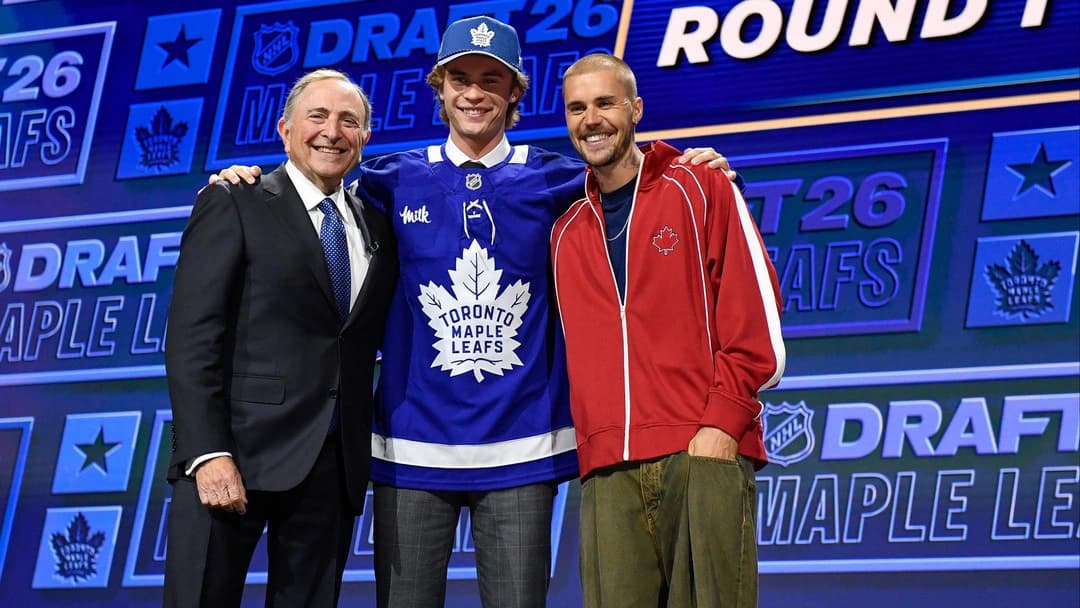
The arrival of Gavin McKenna certainly ensures enormous visibility for the Maple Leafs.
Landing a player considered a generational talent instantly changes an organization's perception.
But we must avoid reducing the analysis to this single element.
The real question lies elsewhere: Did Toronto actually address certain structural weaknesses or did it simply add an exceptional player to a team that still presents the same shortcomings as before?
It will take several seasons to answer that question.
And that's often the problem when judging a draft just hours after its conclusion.
Draft picks remain bets
Every summer, several teams celebrate the number of selections they managed to accumulate.
Yet a pick remains exactly what it has always been: a possibility.
Even a first overall pick offers no guarantee. Subsequent rounds carry even more uncertainty.
Accumulating selections therefore doesn't represent a victory in itself.
True success consists of converting these assets into a better team.
That's precisely where a general manager's work is measured.
The best organizations don't just seek to win headlines on draft night.
They seek to win more games two or three years later.
Verdict
In the immediate aftermath, some organizations appear to have come out on top during this period. Florida, Washington and Minnesota made decisions that clearly match their current situation and objectives.
Conversely, Calgary still raises several questions, New Jersey will have to prove it can absorb the loss of a top-tier goaltender, while St. Louis will need to demonstrate that the accumulated assets will eventually translate into concrete results.
As always, the true judgment will come with time.
But a first impression is already forming.
The 2026 draft market didn't reward the teams that moved the most. It mainly highlighted those that knew exactly where they wanted to go. In a league where every decision influences multiple seasons, this consistency remains often the most valuable asset an organization can possess.
Publicité